Archives
-
Issue № 7
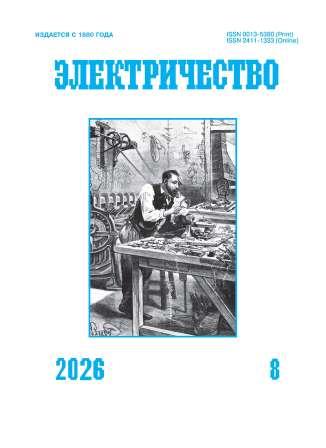
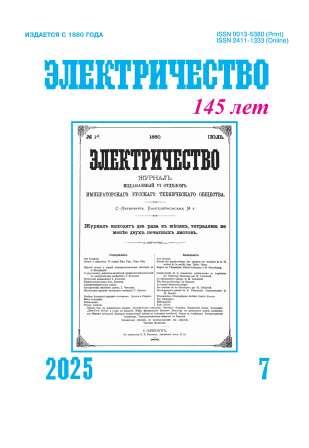
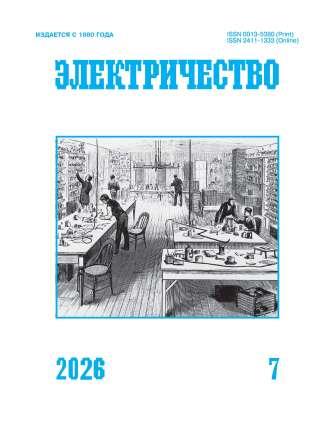
No. 7 (2026)On the Cover – The Edison Laboratory in Menlo Park
Source: Edison's Perfected Electric Light. – Frank Leslie's Illustrated Newspaper, 1880, vol. 49, No. 1267, pp. 353–354.
150 years ago, in 1876, Thomas Alva Edison founded the world's first industrial research center in Menlo Park, New Jersey, USA, where inventions were transformed into commercial products in a short time. Edison assembled a brilliant team of mechanics, physicists, designers, and workers. Many devices that have changed the world have been created or significantly improved here. It was in Menlo Park that the electric lighting system (from generator to light bulb) was developed, which significantly influenced the development of electrical engineering worldwide. -
Issue № 6
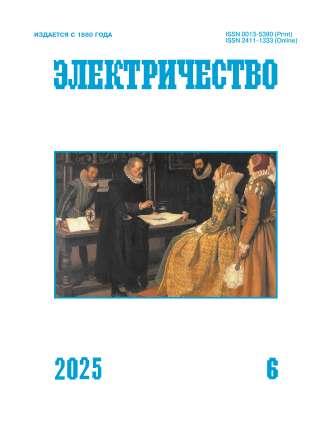
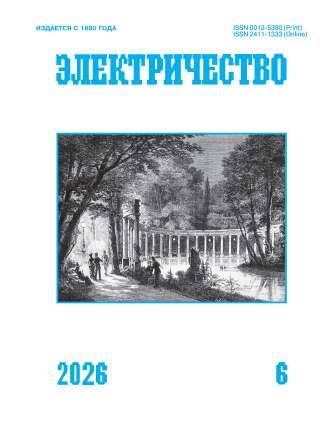
No. 6 (2026)On the Cover – Lighting of the Corinthian colonnade of Paris's Monceau Park with Yablochkov candles.
Source: Clémenceau P. L'éclairage du parc Monceau avec des bougies Jablochkoff. – La Lumière Électrique, 1884, No. 1, pp. 74–76.
150 years ago, in 1876, P.N. Yablochkov received a patent for an electric candle. This invention turned out to be one of the starting points in history. Electrical engineering has become a powerful driving force of global progress. The Russian Light was simple, reliable, and pleasing to the eye. 12 Yablochkov arc lamps were installed in one of the most beautiful places in Paris, Monceau Park. The magazine "La Lumière Électrique" wrote: "The effect created is very majestic, and the colonnade, one of its most beautiful spots in the park, appears at night with grace and grandeur that daylight cannot fully convey." -
Issue № 5
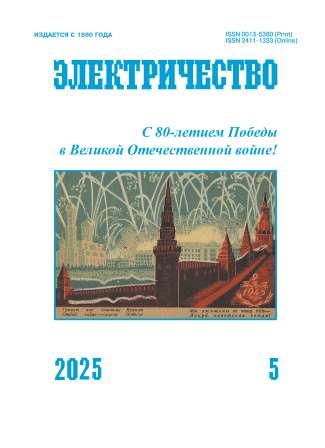
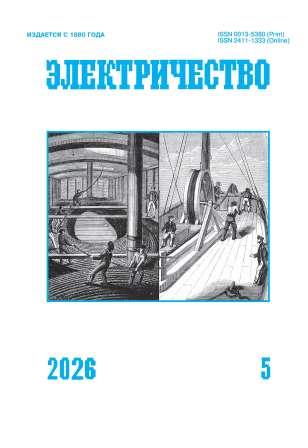
No. 5 (2026)On the Cover – Laying of a telegraph cable across the English Channel in 1851
Source: Figuier L. Les merveilles de la science ou Description populaire des inventions modernes. Paris: Furne, Jouvet et C., 1868, 703 p.
175 years ago, after several unsuccessful attempts, an underwater cable was laid between Dover (England) and Calais (France). The cable was gutta-percha insulated and protected from external influences by steel wire. Before diving into the sea, the cable from the ship's hold was fed to two pulleys and then made several turns around a wooden drum with a diameter of 10 m. -
Issue № 4
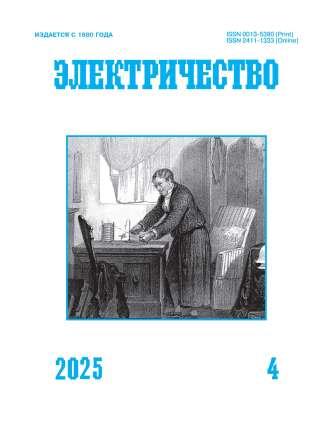
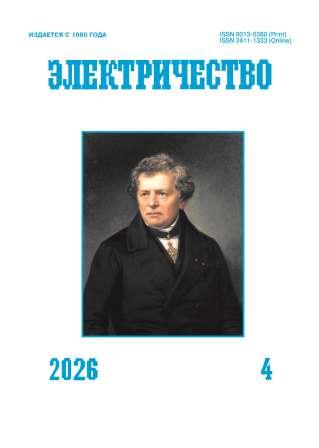
No. 4 (2026)On the Cover – Georg Simon Ohm.
Source: Ohm G.S. Die galvanische Kette, mathematisch bearbeitet. Berlin: Bei T.H. Riemann, 1827, 245 p.
200 years ago, in 1826, Georg Simon Ohm, a mathematics teacher in Cologne, formulated a fundamental principle in electrical engineering – the linear relationship between current and electric voltage in a section of a circuit. The following year, 1827, his book "A Galvanic Circuit Developed Mathematically" was published, where he deduced the law U = I R. Ohm's discovery was strongly opposed by the German scientific community, which was dominated by natural philosophy, which considered the mathematical description of physical phenomena to be an unacceptable simplification. Because of this harassment, the scientist was fired from his job and found himself isolated and poor for many years. Nevertheless, the author wrote: «May the benevolent viewer deign to accept my work with the same love for the subject from which it was born!" -
Issue № 3
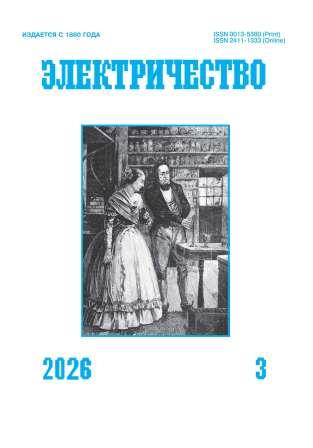
No. 3 (2026)On the Cover – Michael Faraday and his wife Sarah Bernard.
Sources: Brackett C.F. et all. Electricity in Daily Life: A Popular Account of the Applications of Electricity to Every Day Uses. London: Kegan Paul, Trench, Trübner & CO, 1891, 288 p.
205 years ago, in 1821, Michael Faraday, an assistant at the Royal Institute in London, invited his wife to his laboratory to share his delight after a successful experiment. There was a vessel filled with mercury on the table. A current through a vertical copper wire set in motion a magnet floating in a liquid metal. It was the first ever electric motor model. The scientist lived with his beloved wife for forty-six years. -
Issue № 2
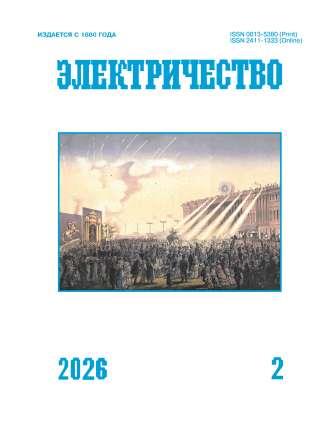
No. 2 (2026)On the Cover – Festive illumination in Lefortovo in 1856.
Sources: Velikolepnyy feyerverk po sluchayu koronatsii pri 1-m i 2-m kadetskih korpusov 17 sentyabrya 1856 goda (Magnificent Fireworks on the Occasion of the Coronation of the 1st and 2nd Cadet Corps on September 17, 1856). M.: Litografiya izdatelya A. Rudneva, 1856.
Rapport fait par M. Le Roux, au nom du comité des arts économiques, sur un régulateur pour la lumière électrique présenté par M. Spakowski, de Saint-Pétersbourg. – Bulletin de la Société d'Encouragement pour l'Industrie Nationale, 1862, Tome 9, pp. 270–271.
170 years ago, in 1856, in Lefortovo, participants in the celebrations dedicated to the coronation of Emperor Alexander II witnessed the first festive electric illumination in Russia. The battery, assembled from 600 Bunsen cells, powered several electrical regulators designed by Alexander Ilyich Shpakovsky, also called "electric suns." The orchestra of 3,000 musicians was accompanied by artillery fire. The fuses of the guns were electric and the shots were controlled remotely using a special keyboard instrument. -
Issue № 1
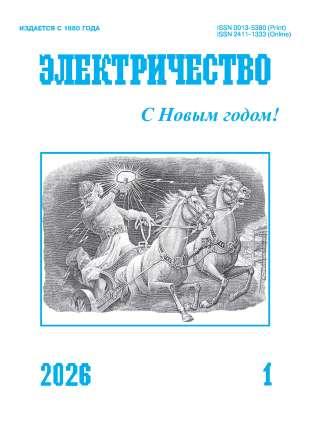
No. 1 (2026)On the Cover – Allegorical representation of Electricity "Thor riding on his chariot".
Source: Borodin D.A. Boginya elektrichestva (The Goddess of Electricity). M.: Penta, 2019, 143 p.
The engraving depicts the Scandinavian God Thor driving a chariot drawn by two horses. Thor holds in his hand the hammer Mjolnir, which emits lightning and light, embodying the power and energy of electricity. In the background (on the right) is a power line symbolizing the transition from the mythological understanding of lightning to the modern use of electricity.